Speaker offers ways of coping with loneliness, isolation caused by COVID-19
Jennifer Moss says a lot of people were feeling stressed out at their jobs, facing a burnout epidemic – and then the COVID-19 (Coronavirus) pandemic hit.
That prompted the award-winning author and CBC Radio columnist to take a long, hard look at how the pandemic has affected our lives, and find ways to cope with the stress.
She has also written a book about it, “The Burnout Epidemic, The Rise of Chronic Stress and How We Can Fix It,” which is set to be released Sept. 28 by Harvard Business Review Press.
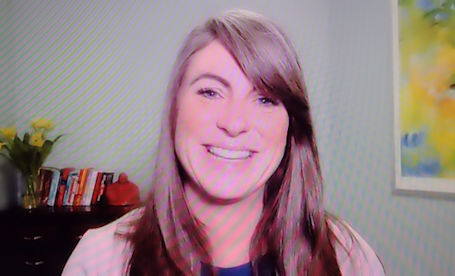
About 100 members and guests of Pine River United Church had a preview of the coping mechanisms Moss outlines in her book, as she spoke to the congregation, via Zoom, Sunday morning.
Given that her first book was about unlocking happiness at work, Moss joked that it seems she went from a happiness expert to an unhappiness expert with this second book.
“We have to focus on our well-being in these challenging times,” she said, citing statistics that indicated 85 per cent of people surveyed said their well-being had declined during the pandemic, while 56 per cent said their job demands had increased, 57 per cent of employees felt that the pandemic had a “large effect on” or “completely dominated” their work, 55 per cent said they have no work/life balance, and 39 per cent felt unable to maintain a strong connection with their colleagues.
“Only 21 per cent rated their well-being as ‘good,’ and a mere two per cent rated it as ‘excellent’,” she said. “Some people are flourishing, but 80 per cent are not doing well. We have ways to improve that.”
She said the loneliness and isolation caused by the pandemic are more difficult to deal with for the younger crowd. However, those aged 56-70 seem much happier, and more agreeable, because they’ve experienced life and are more resilient.
“People like to accomplish things,” said Moss. “But then the reality of the pandemic hits, and they get stressed out. Remember, we are not in normal times. Each week, analyze as a family: Was this a particularly stressful week? What were some of the barriers to reaching our goals? What can we do for each other to make this next week easier?”
She said not all people are falling into a depression; they are languishing or in a brain fog. Symptoms of a brain fog include: trouble searching for your words, difficulty making up your mind so small decisions become a big deal, losing your focus quickly, and small tasks feeling enormous.
“I have this relationship with my dishwasher,” she said. “I just don’t want to deal with it.”
Moss said people are spending a lot of time on Zoom and in front of screens so they need digital-detoxing.
“Take daily walks,” she said. “Block off 20-minute chunks in your calendar so it’s prioritized. Don't eat in front of a screen. Set up a bedtime app. Take a ‘fake commute.’ Do one ‘frivolous’ thing a day for 15 minutes – guilt free. For example, in the middle of the work day, I crawled under a blanket with a hot cup of coffee, and cuddled with our golden retriever.”
Moss talked about various types of rest, including passive/active rest (sleeping or napping); mental rest (fake commute); sensory rest (time from the screens); creative rest (time to focus); emotional and social rest (authentic relationships); and spiritual rest (prayer, meditation, community involvement).
She also discussed mindfulness which involves such items as a “Three Things Activity” where you name three things you can see, you can hear, and you can feel.
And she encouraged people to practise healthy curiosity. “When you spend time doing something you enjoy, you increase your happiness,” she said.
Moss said authentic empathy is important. You have to hear what people need, and realize that your life experience is different than others.
“One study found that the average adult will say ‘I’m fine’ 14 times a week, though just 19 per cent really mean it,” she said. “Almost one-third of those surveyed said they often lie about how they are feeling to other people. We have to dig deeper.”
WE NEED EMPATHY AND CONNECTION
She outlined the difference between empathy and sympathy, and said you want to feel empathy with others, and to do that you must connect and know how they’re feeling.
“What makes things better is connection,” she said. “Not a response, not a silver lining. Humans are meant to belong to a tribe and have connection. That’s what we’ve been missing this past year, that personal connection, because we had to stay apart and had to attend virtual meetings.”
Moss recommended nurturing one or two friends, rather than trying to keep up with everyone right now. “When possible, connect in real life. Say 'thanks' more often and be specific.”
Using the acronym, HERO GEM, she outlined the model for happy, healthy, high-performing people: Hope, Efficacy, Resilience, Optimism, Gratitude, Empathy and Mindfulness.
“The pandemic has changed our behaviour and our brains,” she said. “But look how far we’ve come – holding church services over Zoom!”
She urged people to have cognitive optimism – the consistent belief that everything will turn out okay even if not as planned.
“So much has changed,” she said. “Traditions have changed but they make for great learning experiences. Have gratitude – focus on what you have rather than what you don’t have. It’s important to have emotional flexibility and resilience – what is something you didn’t think you would be good at, until 2020?
“All of this helps us better handle stress. There’s no right way to feel right now. If we’re feeling down, there are tools we can use to feel better. This too shall pass. Lean on your community, and offer more support and compassion for each other.
“Have a Plan B and you’ll be happier, healthier, and have less stress.”
Moss then opened the floor to questions.
When asked why she wrote the second book, Moss said she actually started writing it before the pandemic. Back in 2019, the World Health Organization described burnout as a disease, a workplace phenomenon and an occupational issue.
“I started writing with a focus on that – and then the pandemic hit,” she said. “So, I scrapped about 20,000 words, and began to research people’s feelings and how they were handling the pandemic.”
She said there was new data and it changed just about every day.
“It was constantly evolving. I had to scrap other stuff but finally I finished the book and it is now in pre-sale through Amazon, Indigo and other book stores.”
Another person asked how to bring these coping strategies to the workplace if management isn’t onboard?
“I have a talk focused on the workplace,” said Moss. “I have an open talk with managers and leaders about mental health, including discussion of workload and fairness in pay.”
As for the pandemic, she said people are no longer in emergency mode, but the recovery period could take up to two years, from an emotional standpoint.
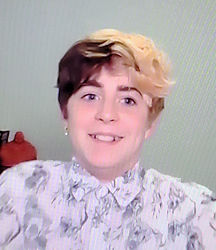
Her 13-year-old son,
Wyatt (right), then took to the screen and sang for the congregation.
He was the understudy for the lead role in “Billy Elliot” at Stratford and was set to perform that role in Halifax but then the pandemic hit and he never had a chance to perform. He is currently acting, singing and dancing in a Netflix movie, “13, The Musical.”
Moss, who lives in Kitchener with her husband, Jim, and three children, is the daughter of Sally and Doug Young who live in Point Clark and attend Pine River United Church.
 Written By
Liz Dadson is the founder and editor of the Kincardine Record and has been in the news business since 1986.



Related Stories
No related stories.