Family raising funds for local woman's MS treatment outside Canada
Erin Taylor of Point Clark has been living with Multiple Sclerosis (MS) for almost 20 years.
She was diagnosed with Relapsing Remitting MS in 2003, and over the past five years, has begun the transition to Secondary Progressive MS, with lasting mobility issues impacting her gait, balance and co-ordination.
In order to halt that progression, she is travelling to Clinica Ruiz in Puebla, Mexico, Sept. 26, for a Hematopoietic Stem Cell Transplant (HSCT).
And her family is hoping the community will help raise the funds needed for this treatment.
MS is a chronic auto-immune disease of the central nervous system. Since that includes the brain, spinal cord and optic nerve, MS can affect vision, memory, balance and mobility. It is considered an episodic disability, meaning that the severity and duration of illness and disability can vary and are often followed by periods of wellness. It can also be progressive.
The disease attacks myelin, the protective covering of the nerves, causing inflammation and often damaging the myelin. Myelin is necessary for the transmission of nerve impulses through nerve fibres. If damage to myelin is slight, nerve impulses travel with minor interruptions; however, if damage is substantial and if scar tissue replaces the myelin, nerve impulses may be completely disrupted, and the nerve fibres themselves can be damaged.
MS is unpredictable and may cause
symptoms, such as extreme fatigue, lack of co-ordination, weakness, tingling, impaired sensation, vision problems, bladder problems, cognitive impairment and mood changes. Its effects can be physical, emotional and financial.
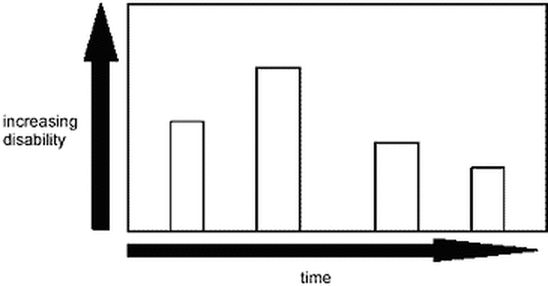
Relapsing-Remitting MS (RRMS), which is what Taylor has, is characterized by unpredictable but clearly-defined relapses (also known as attacks, exacerbations or flare-ups) during which new symptoms appear or existing ones get worse. In the period between relapses, recovery is complete
(photo above) or nearly complete
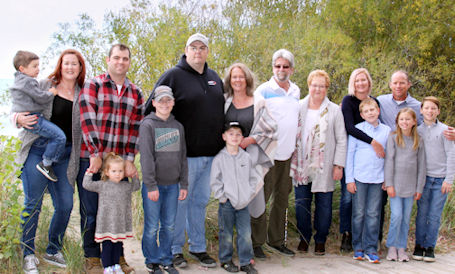
(photo below) to pre-relapse function (remission).
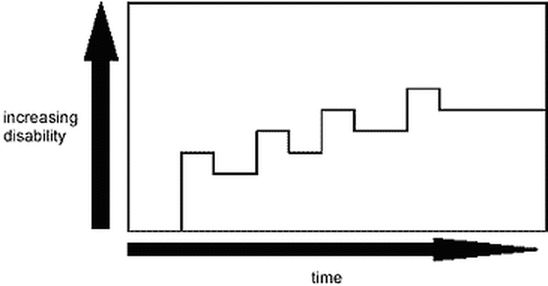
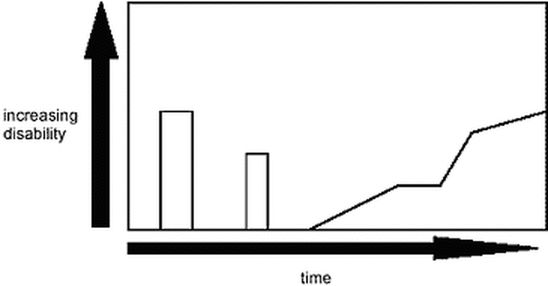
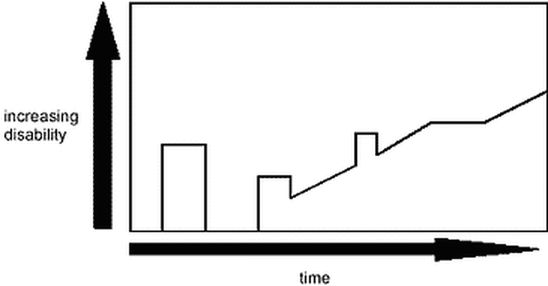
Most people with RRMS will eventually transition to a phase of the disease called secondary progressive. This phase of the disease has progressive worsening and fewer relapses, though sometimes there are occasional relapses and minor remissions and plateaus
(photos below).
An Autologous HSCT is a treatment for auto-immune diseases, such as MS, Scleroderma, Type I Diabetes, Chronic Inflammatory Demyelinating Polyneuropathy, Transverse Myelitis or Neuromyelitis Optica. The treatment has been scientifically proven to halt the disease progression.
Hematopoietic stem cells are used to restore the normal hematopoiesis of the patient after being exposed to high-dose chemotherapy delivered to aim immuno-suppression. Treatment duration is 28 days.
Clinica Ruiz is the largest patient-volume auto-immune disease HSCT private treatment centre in the world. Dr. Ruiz Argüelles and Dr. Gómez-Almaguer have performed more than 3,000 HSCT procedures during more than 20 years, for hematological and auto-immune diseases, out of which more than 1,000 have been for MS.
What happens during HSCT?
- Medical pre-testing is completed
- Initial chemotherapy is administered to condition the immune system, eliminate auto-reactive cells responsible for auto-immunity, and begin to mobilize stem cells in the blood stream
- Stem cell mobilization – to further mobilize the stems cells from the bone marrow into the blood stream, Filgrastim injections are administered over a seven-day period
- Stem cell harvest
- Additional chemotherapy – two additional days of high-dose chemotherapy are administered to further reduce white blood cells and suppress the majority of the existing immune system responsible for auto-immunity
- Stem cell transplant – stem cells are given back to the patient
- Neutropenic period begins – this is a period of minimum immune function and lasts approximately seven to 10 days; during this period, diet and exposure are highly-controlled to reduce the risk of infection
- Hematology consultations – blood samples and Filgrastim
- Rituximab infusion – this depletes any remaining lymphocytes
The cost of the HSCT treatment is $55,500 (U.S.), including the treatment, accommodations and meals. Not included, are flights, extra testing required (MRI scans), and follow-up medications.
The family has set up a GoFundMe to help raise funds to assist with the cost of treatment. The link is
www.gofundme.com/f/help-us-help-erin-recieve-stem-cell-transplant?qid=96962c35400e41aab6793efb60fc0a03.
If you do not wish to donate electronically, cash donations would gladly be accepted by contacting Lindsey Bowers at
linzyt3@gmail.com. GoFundMe does charge a small fee for all on-line donations which does impact the funds received by Taylor.
The family is also holding a garage sale,
Saturday, June 19, from 8 a.m. to 3 p.m., at 409 Princes St. S., Kincardine. The rain date will be Sunday, June 20. All proceeds from the sale will go directly to Taylor’s treatment.
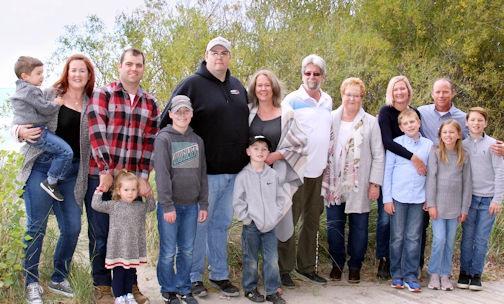 Erin Taylor (centre) of Point Clark, with her family; from left, are James, Lindsey, Joe and Ruby Bowers, Cole, Matt and Preston Tebutt, Erin Taylor, Don and Nancy Taylor, Lauren Taylor, Andrew and Rae Robertson, and Kris and A.J. Senicar; photo courtesy of Lindsey Bowers
 Written By
Liz Dadson is the founder and editor of the Kincardine Record and has been in the news business since 1986.



Related Stories
No related stories.