Busy week for South Bruce 4-H Dairy Club, with first show, and fourth meeting
It has been a busy week for members of the South Bruce 4-H Dairy Club, with the first show of the season and the fourth meeting.
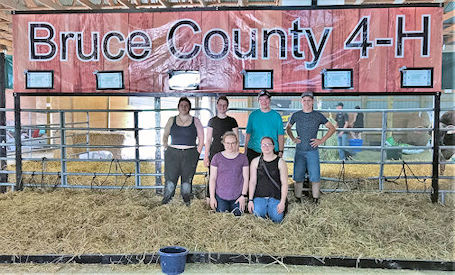
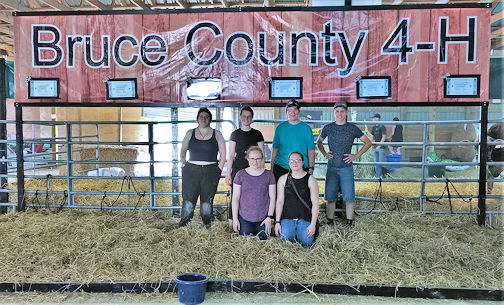
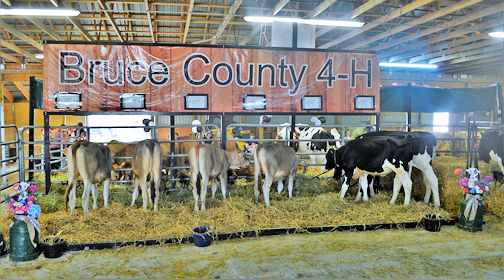
The Eastgen Challenge 2023 was held in Woodstock, July 6-7. The six members, who made up this year's team, were on the road early in order to get the Bruce County display and bedding pack ready before the calves arrived.
Each year, the show has a theme that counties are to use when designing their displays. This year's theme was, “Remembering Dr. Tim Henshaw” who served the agricultural community for more than 40 years as a veterinarian. He completed nearly 1.1-million cow examinations during his career. He was an icon in the veterinary field, and was heavily involved in 4-H events, including performing calf inspections at the Eastgen Challenge Shows across Ontario and the TD Classic held at the Royal Agricultural Winter Fair. Sadly, he died suddenly, earlier this year.
After unloading the carefully-packed supplies and equipment, the team got to work building the display. About 30 minutes and one trip to a hardware store later, the display and bedding pack were ready.
Once the calves arrived, they were inspected to insure they were healthy, and then taken to the wash rack for a quick bath to clean off any dirt and manure they had picked up during the trailer ride.
After all the heifers were settled on the pack, it was time for lunch. Part of the entry fee covers three meals for the competitors while at the show. During lunch, announcements were made about the educational learning that would happen later.
There were three different learning segments: new genetics developed by Eastgen to reduce methane emissions; a clipping demonstration (however, due to power issues, the fitter giving the demonstration could only talk the competitors through how he prepares animals for shows); and how to feed heifers at the shows to make them look their best.
After the teaching was done, participants had to take a quiz to show what they learned. Marks on the quiz contribute points toward Grand Champion Overall and Premier County.
When this was finished, the competitors returned to the barn to begin prepping for the show the next day. They stopped only for supper and the activity honouring Henshaw later in the evening. By 10 p.m., the team had settled the calves for the night and headed to a nearby hotel to try and get some sleep.
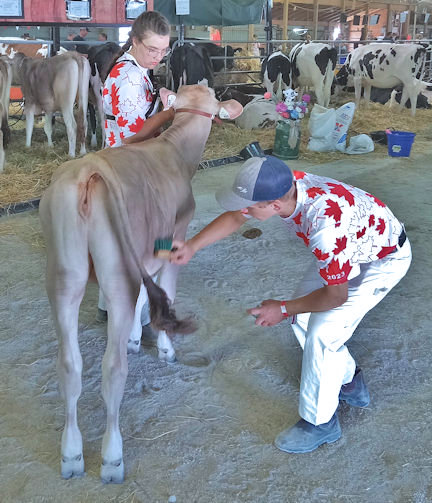
At 3 a.m., the team returned to the barn. Some cleaned up the pack and display area while others washed the calves again as they had become dirty overnight. Once the calves were clean and dry, show preparations were in full swing with top lines being set and feeding started.
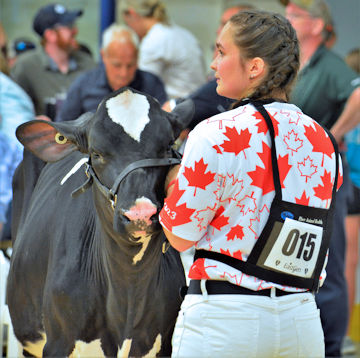
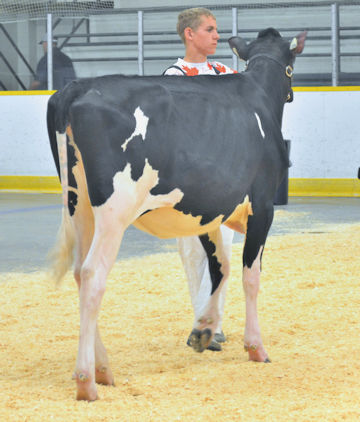
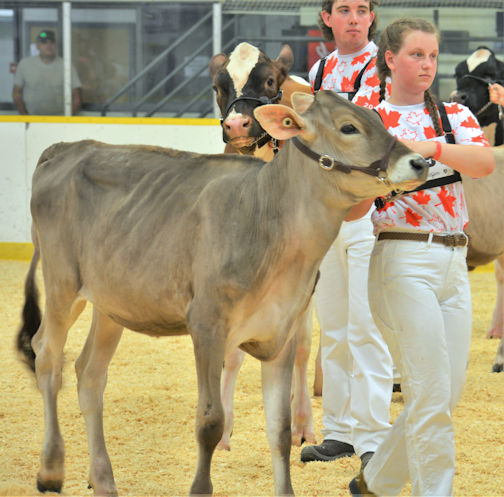
The show started at 8 a.m., with junior showmanship. For some on the team, this was the first time ever showing dairy.
When the show finished around 4 p.m., the display was taken down and leftover supplies reloaded. Despite being tired from the two days of preparation and little sleep, everyone had a good time and looking forward to the shows coming up in the next couple of weeks.
FOURTH MEETING
The next day was the fourth meeting of the South Bruce Dairy 4-H Club. This was the club’s “Showing and Fitting” meeting and was held at the Teeswater Fairgrounds.
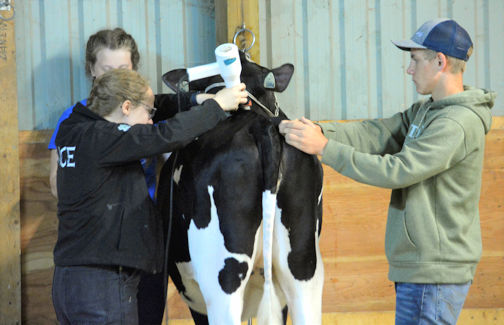
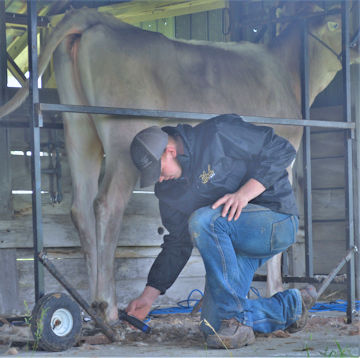
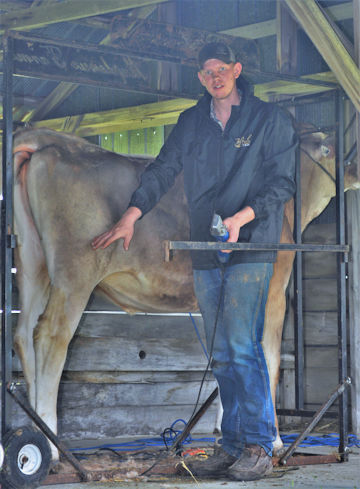
The club began the meeting with a fitting demonstration. Seth Johnston (a 4-H member of Perth County) has been fitting calves since he was nine years old. He has prepared animals at shows in both Canada and the United States.
He showed the club how he clips a heifer, and explained how clipping can change the animal's appearance. The purpose of clipping calves is to highlight their strengths and cover their weaknesses.
First, Johnston blew up the top line and belly hair with a hair blower and a top line brush. Next, he cut his guidelines for the top and the belly. He told the club when he finishes clipping the main body, he will blend these lines but in the meantime, the lines keep him from cutting too much off in these areas.
Once he clipped the main body on both sides, he blended the belly hair. “When you are finished, you don't want to be able to see where you stopped and where the belly hair starts.” He also traced the heifer’s heart girth, explaining that leaving the hair longer here makes the animal look deeper.
Next, he switched clippers and started on the legs. He showed the club that using thinner blades on the legs makes them look finer and less coarse. With most of the legs clipped, Johnston grabbed his small battery-operated clippers to trim the hard-to-reach places - in the hocks, around the dew-claws and the tail.
Lastly, he set the top line. He blew the top up again, using the top brush to get all the hair standing up. Carefully, he started to wedge the top in, taking the wide stand of hair down to a thin line. Then, he sprayed the top with hairspray and used the blower to dry it.
Switching to a pair of large cordless clippers with extremely thin blades, he slowly leveled the top and took a little off the sides to wedge the top tighter. “It is always better to make more small cuts than a couple of big ones,” he said, as he finished trimming the top line. “It’s not about how fast you can clip your calf but how good the calf looks when you’re done.”
Once he was finished with the top line, he showed the club how he preps the calf right before going to the ring. Using a skin conditioner, a finishing spray, and some paper towels, he shone the heifer. The final product was a heifer ready for the ring.
With the clipping demonstration finished, the club took a quick break for lunch. Then, it was on to the “showing” half of the meeting.
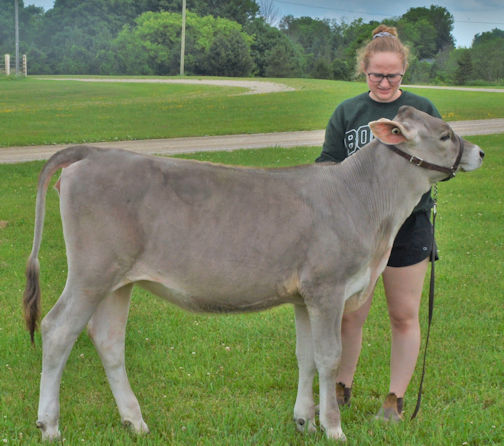
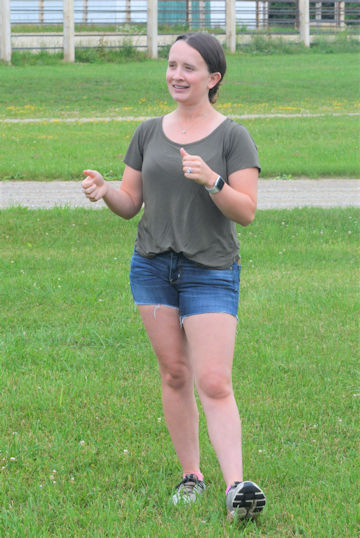
Serena Lamont, a Bruce County Dairy 4-H alumnus and champion showman, started the clinic with a basic overview of what showmanship is and why it matters. She explained that the goal is to present your calf in a way that covers its faults and displays its strengths.
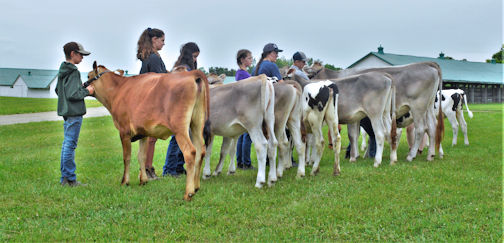
She had all the members lead their calves in a mock show, to demonstrate the things they can do to improve their showmanship. For instance, how to properly hold the halter and lead so it looks neat and tidy, and when to switch feet or turn in the ring, as well as where to place their hands depending on where the judge is in the ring.
The meeting came to a quick end as the rain moved in. The club members thank Johnston and Lamont for taking the time to teach them how to improve their skills. Also thanks to the Teeswater Agricultural Society for use of the fairgrounds, and to Howick Mutual Insurance Company for the generous sponsorship.
The next meeting will be held in August.
 Written By
No bio for this author.



Related Stories
No related stories.