20 years later: How Bruce Power helped Ontario recover from black-out of 2003
If you’re old enough, you’ll remember exactly where you were when Ontario’s lights went out, and air-conditioners ground to a halt, 20 years ago, today, on a hot, muggy afternoon.
At 4:11 p.m., Aug. 14, 2003, a series of power surges over a 12-second period, triggered a cascade of shutdowns at more than 100 generating plants throughout eight states in the United States states and Ontario, resulting in the largest black-out in North American history.
An estimated 50-million people, including 10-million Ontario residents and businesses, were suddenly without power when 61,800 megawatts (MW) of generation disappeared, in what was, ultimately, deemed to be the result of inadequate tree-trimming in Ohio, but also, of a fragile power grid.
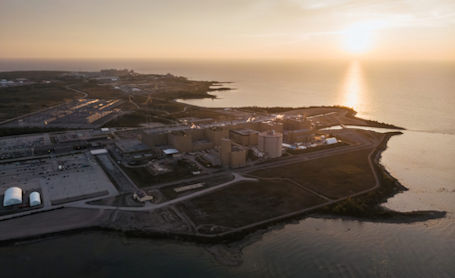
Bruce Power led the recovery of Ontario’s electricity system, with three of the four units at the Bruce B generating station reconnected to the provincial grid within hours of the event, bringing power to Ontarians through the Bruce-Milton transmission line, which was completed by Hydro One just the year prior.
Former Ontario premier Erie Eves visited Bruce Power shortly after the black-out, saying, “Nobody (worked) harder than you people have, and you did an excellent job. I want you to know that we understand that and appreciate what you’ve done.”
Twenty years later, the province’s electricity grid is in much better shape from a reliability stand-point, especially after Bruce Power returned to service the four units at the Bruce A generating station over the decade following the black-out, providing reliable, baseload power and allowing the province to phase out coal-fired generation.
The province is now transitioning to a clean-energy future and has made commitments to refurbish its nuclear fleet, looking to expand to meet future needs.
“Since 2003, Bruce Power has more than doubled its output of clean, reliable energy, serving people, businesses and hospitals across Ontario, and continues to grow,” said Mike Rencheck, Bruce Power’s president and chief executive officer.
“The province has made great strides since the 2003 black-out to ensure that our grid is clean and reliable, and it has made commitments to ensuring that will continue as electricity demand continues to grow in the decades to come.”
In December, 2015, Bruce Power reached an agreement to advance its Life-Extension Program and Major Component Replacement project to refurbish its nuclear fleet and secure the site’s operation until 2064. In addition, Bruce Power is investing in its existing infrastructure through a series of incremental power recovery projects under Project 2030, which aims to increase annual power output to upwards of 7,000 MW for the 2030s.
The Ontario government recently released its
Powering Ontario’s Growth plan, stating, “We need to act today to ensure we have the energy we need to power economic growth and electrification over the next three decades while maintaining our clean electricity advantage.”
As part of its plan, the government also recently announced its support to advance the long-term planning and consultation work required to explore nuclear expansion options at the Bruce nuclear site and beyond. Collaborating with communities, Bruce Power can provide economic opportunities and clean energy with made-in-Canada solutions; then, supply these to the world.
“Bruce Power is here for the people of Ontario, just like it was 20 years ago,” said Rencheck. “We’re working to extend the life of our units and optimize our existing assets so we can meet the rapidly growing demand for clean energy.
“We’re excited about Indigenous/community engagement and involvement as we consider what the future might hold for the Bruce site and explore further opportunities to increase our output.”
 Written By
No bio for this author.



Related Stories
No related stories.