Ask the Pharmacist
Q: I have been taking fish oil supplements for many years and I cannot recall why anymore. Can you remind me what fish oil is good for and if I should still be taking it?
A: That is a great question. Fish oil supplements are one of the leading supplements sold due to their claims of supporting heart health, reducing inflammation and cancer risk. Even some of our furry friends have joined the bandwagon and are given fish oil supplements.
One of the reasons fish oil has become so popular is it offers a source of Omega-3 fatty acids. These fatty acids are comprised of docosahexaenoic acid (DHA), eicosapentaenoic acid (EPA) and alpha linolenic acid (ALA). You can find ALA in many plant food oils, such as flaxseed, soybean and canola oil; whereas, DHA and EPA are the ones found in fish and other seafood.
ALA is considered an essential fatty acid since our body is unable to manufacture it, so it must be consumed. Though our body does not directly manufacture DHA and EPA, we can convert ALA into EPA and then into DHA, although the amounts formed this way are very minimal. Hence, it is best to get these Omega-3 fatty acids through diet or by supplements.
Let’s discuss the benefits of Omega-3 fatty acids. These can be found in the structure of our membranes that surround our cells and may regulate the inflammatory response and, in turn, augment the healing response to those cells. Therefore, it is suggested that Omega-3s may be beneficial for those suffering from rheumatoid arthritis and other similar ailments.
There is also some thought that they improve our heart health by reducing heart disease, blood pressure and cholesterol. It is no wonder, then, that so many of us have added this supplement to our daily routine. It makes sense; who wouldn’t benefit from a lower risk of heart disease and the added benefit of reduced inflammation in our aging bodies? Plus, there appears to be few side effects associated with fish oils, such as possible fishy aftertaste, bad breath, heartburn, and higher doses increasing the risk of bleeding. It is not recommended to take high doses of fish oil if you are taking blood thinners.
Theoretically, we should be able to reap these positive benefits from Omega-3 fatty acids by taking them as a supplement. However, there are some concerns arising about the effectiveness of them. There have been numerous studies looking at the validity of the health claims attached to the fish oil supplements which will be mentioned below.
Cardiac health:
There have been several studies done, concluding that eating one to two servings of fish or seafood each week helps to reduce your risk of heart problems. This effect is more enhanced if you have replaced less healthy food choices (red meat, fried foods, fast foods) with these fish/seafood options. It is not fully understood if these health benefits arise from the Omega-3 fatty acids in the foods or perhaps it is due to opting for healthier food choices.
Many people prefer to take a supplement as opposed to making changes to their diet. A study done comparing Omega-3 supplements with placebos proved the supplement was superior. However, it was later discovered that mineral oil was used as the placebo in this study which has negative effects on our heart health; thus, it was not surprising to see a better outcome with Omega-3 supplements.
There have also been comparisons of acquiring Omega-3 solely through supplements versus solely through diet. Higher blood levels of Omega-3 fatty acids were seen in the people who consumed dietary sources of Omega-3 a minimum of twice a week and showed a reduced risk of heart disease. On the contrary, taking fish oil as a supplement instead, showed very little to no improvement on heart health.
Cancer:
There are claims that Omega-3 will help reduce cancer risk but when studied further, the supplements did not reduce this overall risk.
Eyes:
DHA levels appear in the retina so it was hoped that Omega-3 fatty acids may help with reducing specific eye diseases.
- Age-related macular degeneration (AMD) – higher amounts of Omega-3 in our diet may help lower this risk. Unsure if supplements help. It has been shown, however, that once you have AMD, supplements are not beneficial to slow down or prevent worsening of the disease.
- Dry eyes – a study done comparing supplements to a placebo did not show any improvement or worsening of their condition.
Rheumatoid arthritis:
It is believed that Omega-3 fatty acids can help reduce inflammation in the body. It is not surprising to learn that those suffering from rheumatoid arthritis have noticed reduced morning stiffness, joint stiffness and overall pain. Once again, these benefits have been seen in people who have introduced more Omega-3 rich foods in their diet. It is inconclusive if the supplements can help since many people did not find much benefit with them.
A recent study discovered that fish oil supplements do not offer the benefits that are touted on their labels. It is not uncommon for marketers to overstate the health benefits on their products, and it appears that fish oil supplements are not an exception to this.
On another note, there is also concern that the supplements may have impurities within them, such as mercury, which can have negative effects. It has long been known that mercury has been found in some fish. We have control over what fish choices we consume but, obviously, not which fish options are chosen in the manufacturing of these supplements.
Dr. Gregory Curfman of the New England Journal of Medicine was quoted saying, "Given the current uncertain state of knowledge, neither patients nor physicians can be confident that Omega-3 fatty acids have any health benefits; yet, in 2019, the global market for Omega-3 fatty acids reached $4.1-billion and is expected to double by 2025."
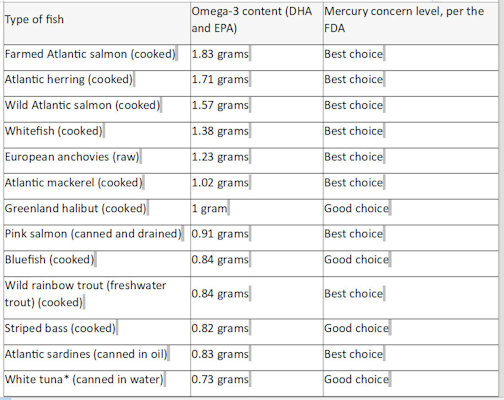
It sounds as if it might be best to stop buying the fish oil supplements and get our Omega-3 fatty acids through our diet. The healthiest way to prepare your fish is to opt for baked or broiled recipes over pan-fried. Here is a list of fish options, taken from the Cleveland Clinic, that are high in Omega-3 fatty acids and low in mercury.
 *Note:
Canned white tuna is typically albacore tuna. Canned tuna known as “chunk light” is usually skipjack tuna. Canned chunk light tuna has a lower level of Omega-3 (0.23 grams per 3 ounces). Canned skipjack tuna is listed as a “best choice” for mercury content by the FDA.
For vegetarians and people who do not like fish, here are a few plant-based options.
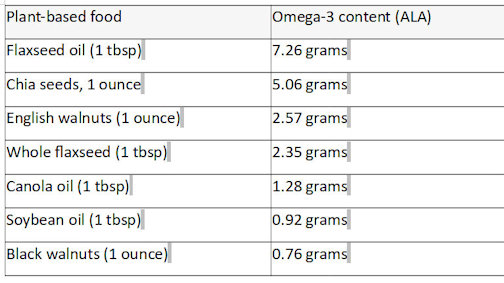
In order for your body to use the nutrients from ALA, it needs to convert it first to EPA and then DHA. It’s not a terribly efficient system. That’s why getting EPA and DHA directly from fish sources is preferred, when possible.
For more information about this or any other health-related questions, contact the pharmacists at Gordon Pharmasave, Your Health and Wellness Destination. Also check the website at www.gordon-pharmasave.com/ and the Facebook page at www.facebook.com/GordonPharmasave/
 Written By
No bio for this author.




Related Stories
No related stories.