Ask the Pharmacist
Q: Last week, you mentioned that one of the ways to help prevent constipation is to have a lot of fibre in the diet. What foods would I have to eat?
A: To refresh, we discussed our topic of fecal impaction and constipation. We learned that the best way to avoid this preventable occurrence is to:
- Keep active
- Keep hydrated
- Have a well-balanced diet that includes fibre (38 grams for men who are 50 years of age and younger and 30 grams for men over 50 years of age; 25 grams for women who are 50 years of age and younger and 21 grams for women over 50 years of age)
Many people are unwilling to add fibre to the diet as they are unaware of the many health benefits fibre has such as:
- Improving digestion by making the stools easier to pass through the body
- Lowering cholesterol levels and also blood pressure
- Reducing risk of colorectal cancer and breast cancer
- Reducing risk of diabetes
- Lengthening our lifespan
- Improving our weight management
With all these benefits, we all should be aiming to increase our fibre intake. How does one go about achieving that amount of fibre in the diet? Let’s first discuss the types of fibre. Fibre is found in many types of foods and are grouped as either soluble or insoluble.
Soluble fibre foods work by attracting water and breaking themselves down to a gel within the colon. This, in effect, slows down digestion which helps the body feel full longer. Examples of soluble fibre options are oat bran, nuts, beans, seeds, and lentils, as well as some fruits and vegetables.
Insoluble fibre foods help rid the body of waste products which helps improve our bowel health. Insoluble fibres help treat and prevent constipation which is handy to have in our diet. Examples of insoluble fibre options include beans, nuts, whole wheat flour, berries, cauliflower, green beans, potatoes, to name a few.
Both types of fibre are important, but you do not need to look up how much of insoluble versus soluble fibre you are ingesting. Just aim for the suggested amount of overall fibre in your diet. Some food choices, such as many plants, offer both soluble and insoluble fibre, which makes them a great option for fibre.
If your diet was seriously lacking in fibre, it is suggested that you be kind to your body and slowly increase the amount of fibre. This will help reduce the body from retaliating with much flatulence (gas) until your body adjusts to it.
Here are some suggestions to help you increase your fibre. When looking at breakfast options and comparing oatmeal to a bowl of cheerios, it was noted that they both offer the same amount of fibre (three grams). Well, that is a start to your daily fibre but there would still be a long way to go to reach your daily quota.
You could opt for eating an all-bran cereal which has a significantly higher fibre content (nine grams) right off the bat. Consider using a nut-based milk, such as almond milk, which gives you a little more fibre, and top it off with berries (raspberries are highest in fibre) and chia seeds.
Oatmeal breakfast = 11.14 grams of fibre
- 1/3 cup - 3 g
- 1 tbsp natural peanut butter - 1 g
- 2/3 cup almond milk – 0.64 g
- 1.5 tbsp chia seeds – 5 g
- 1/4 cup blueberries – 1.5 g
- Cinnamon – 0 g
Cheerios breakfast = 10.5 grams fibre
- 1 cup cheerios – 3 g
- 1 cup almond milk – 1 g
- 1.5 tbsp chia seeds – 5 g
- 1/4 cup blueberries – 1.5 g
After a hearty breakfast such as the above, you are nearly one-quarter to one-half way to your daily fibre goal. Now, let’s take a look at lunch options.
A bean and vegetable salad may offer around 11 grams of fibre; whereas, a regular garden salad may offer around 3.5 grams of fibre, on average. If you choose to have a vegetable salad, consider throwing some beans or quinoa into the salad to give some added flavour and fibre.
If you like to eat sandwiches, opt for whole grain breads over white and don’t forget to add vegetables, either in the sandwich or on the side. Fruit is also a great source of fibre so be sure to have fruit as a snack. For dinner, try to aim to have vegetables on half of your plate.
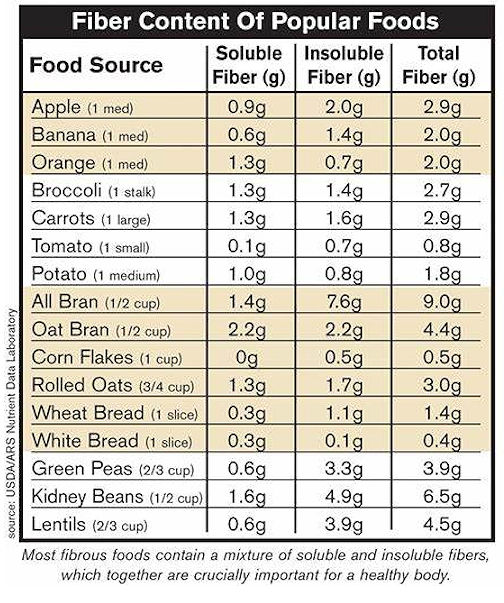
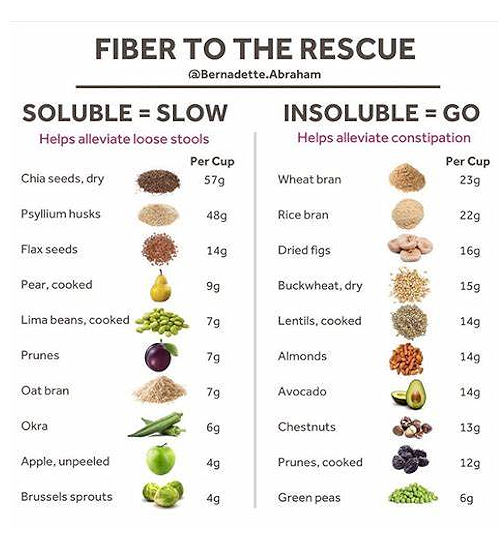
Check out the tables below to compare the fibre content of various foods.
Chart from Mayo Clinic:
| Fruits |
Serving size (grams) |
Total fibre (grams)* |
| Raspberries |
1 cup (123) |
8.0 |
| Pear |
1 medium (178) |
5.5 |
| Apple, with skin |
1 medium (182) |
4.5 |
| Banana |
1 medium (118) |
3.0 |
| Orange |
1 medium (140) |
3.0 |
| Strawberries |
1 cup (144) |
3.0 |
| Vegetables |
Serving size (grams) |
Total fibre (grams)* |
| Green peas, boiled |
1 cup (160) |
9.0 |
| Broccoli, boiled |
1 cup chopped (156) |
5.0 |
| Turnip greens, boiled |
1 cup (144) |
5.0 |
| Brussels sprouts, boiled |
1 cup (156) |
4.5 |
| Potato, with skin, baked |
1 medium (173) |
4.0 |
| Sweet corn, boiled |
1 cup (157) |
4.0 |
| Cauliflower, raw |
1 cup chopped (107) |
2.0 |
| Carrot, raw |
1 medium (61) |
1.5 |
| Grains |
Serving size (grams) |
Total fibre (grams)* |
| Spaghetti, whole-wheat, cooked |
1 cup (151) |
6.0 |
| Barley, pearled, cooked |
1 cup (157) |
6.0 |
| Bran flakes |
3/4 cup (30) |
5.5 |
| Quinoa, cooked |
1 cup (185) |
5.0 |
| Oat bran muffin |
1 medium (113) |
5.0 |
| Oatmeal, instant, cooked |
1 cup (234) |
4.0 |
| Popcorn, air-popped |
3 cups (24) |
3.5 |
| Brown rice, cooked |
1 cup (195) |
3.5 |
| Bread, whole-wheat |
1 slice (32) |
2.0 |
| Bread, rye |
1 slice (32) |
2.0 |
| Legumes, nuts and seeds |
Serving size (grams) |
Total fibre (grams)* |
| Split peas, boiled |
1 cup (196) |
16.0 |
| Lentils, boiled |
1 cup (198) |
15.5 |
| Black beans, boiled |
1 cup (172) |
15.0 |
| Cannelloni, Navy, Great Northern beans, canned |
1 cup (180) |
13 |
| Chia seeds |
1 ounce (28.35) |
10.0 |
| Almonds |
1 ounce, about 23 nuts (28.35) |
3.5 |
| Pistachios |
1 ounce, about 49 nuts (28.35) |
3.0 |
| Sunflower kernels |
1/4 cup (32) |
3.0 |
 For more information about this or any other health-related questions, contact the pharmacists at Gordon Pharmasave, Your Health and Wellness Destination. Also check the website at www.gordon-pharmasave.com/ and the Facebook page at www.facebook.com/GordonPharmasave/
 Written By
No bio for this author.




Related Stories
No related stories.