NIMBY: Nature In My Back Yard – Spring clean-up
It may be hard to imagine looking out the window right now, but I predict that one day soon the sun will come out, the temperature will rise, and gardeners and homeowners everywhere will experience an irresistible urge to go outside and “clean up.” After a long winter spent inside, the new season brings with it a desire to start fresh.
However, as I walk the streets on a sunny March day, I cringe when I see enthusiastic people wielding their rakes and filling leaf bags to go to landfill. All the insects that were over-wintering in the leaves, this spring's and summer’s generation of pollinators, are being gathered up and sent to their deaths.
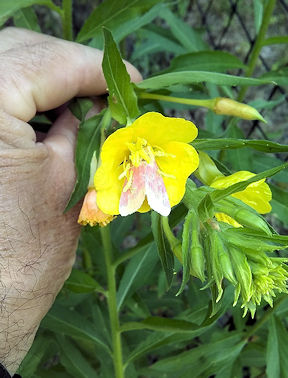
Some sources claim it’s best to wait until daytime temperatures are consistently above 10 degrees Celsius for a week before doing any work outside. I’ve also read advice to wait until after apple and pear trees blossom. However, insects have different biological cycles and become active at different times. Bumblebee queens emerge from their winter burrows in early spring, from late March into April, and even early May, depending on the temperature, and immediately need to forage. On the other hand, the elusive and delicately-coloured primrose moth doesn’t emerge until its host plant, the Evening Primrose, is in flower in late June.
The primrose moth's entire lifecycle is tied to the native plant, Evening Primrose; adult moths don't emerge until it blooms in late June
In short, the right time to clean up your garden is never.
For people seeking to reconnect with nature and promote more diversity of life on their property, the issue can be viewed as one of management: finding a balance between the needs of nature and that of humans.

The stalks of last year’s plants which perhaps held seed heads that fed birds throughout the fall and winter, are now brown and look bedraggled. It’s tempting to cut them off and discard them on the compost pile. Yet those stems may have insect larvae inside still developing.
Trim standing stems from the previous year’s growth
Leave a foot or so of stem, cut the tops off and either leave them on the ground or tuck them out of sight in a back corner of the garden. Any insects inside can emerge when ready. The standing stalks will quickly be hidden by new growth and will actually help this year’s growth by acting as support. Think of them as built-in tomato cages.
As much as possible, leave the leaves and organic matter in your garden and yard. Not only do they provide food and habitat for insects, they act as mulch and as they decompose, nutrients are returned to the soil. Watch for birds dancing among the leaves flipping them over searching for insects or gathering fibres and grasses to build nests. In late spring, you may be fortunate to experience the magical twinkling of fireflies at twilight.
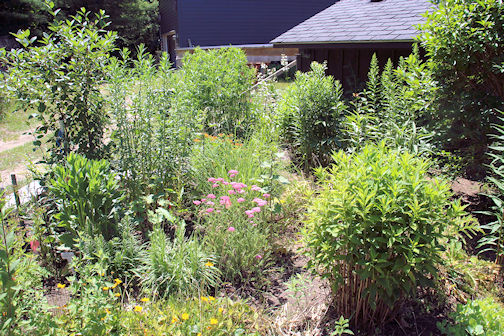 In a few weeks, new growth will cover the old stalks which will support from within
If leaves must be removed in spring, pile them off to the side for as long as possible to allow for insects to emerge.
When the urge to get dirty becomes overwhelming, consider March the perfect time to remove unwanted and invasive species, such as burning bush, porcelain berry vine, European buckthorn, Japanese barberry, English ivy and periwinkle, to name but a few. To identify more, go to the Ontario Invasive Plant Council guide: “Grow Me Instead (Southern Ontario) guide":
www.ontarioinvasiveplants.ca/resources/grow-me-instead/.
In late winter, last year’s growth looks dead and unappealing but it may be full of life just biding its time. If you have the patience to allow nature to follow its own schedule, you will be rewarded.
 Written By
Christine Roberts is a retired elementary school teacher, past-president of Huron Bruce Nature, executive member of the Ripley and District Horticultural Society, volunteer for the David Suzuki Foundation, VON volunteer fitness leader and a passionate lover of nature.




Related Stories
No related stories.