NIMBY: Nature In My Back Yard – No Mow May or No More Mow?
After a particularly wet spring, the temperatures are starting to rise and life in my yard is bursting forth in the form of budding trees and flowers, abundant birds, some butterflies, dragonflies and hundreds, if not thousands, of bees and flies.
The humans are coming forth in large numbers too, as I see people raking leaves (which I wish they’d leave longer) and fertilizing lawns. Down near the shoreline, my property is mostly sand and not very turf-grass-friendly. We decided long ago not to fight nature and let our lawn be diverse.
What grass we have, grows slowly, allowing us to mow infrequently which suits us as we want to support pollinators. Some years past, we embraced the "No Mow May" movement. I even made my own sign to post in my front yard. "No Mow May" sounds like an easy way to help wildlife but this initiative is not without controversy.
Simply put, the argument for "No Mow May" is that allowing dandelions, clover and other plants to grow, provides an early spring food source for bees, butterflies and other pollinators.
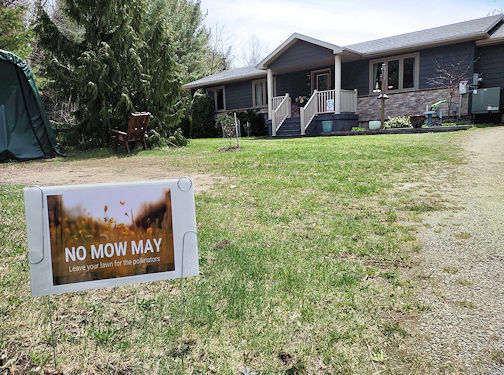 Christine Roberts' homemade sign proclaims her desire to help pollinators
The argument against, is that many of those plants are non-native and have limited nutritional value. Many homeowners also dislike the untidy look of lawns allowed to grow longer and this can cause conflict between neighbours.
Both are true. Dandelions do not provide all the necessary nutrients. However, if they are the only food source present, insects will feed on them until something better becomes available.
I’d like to propose an alternative: "No More Mow."
Take a look at your property. How much of it is lawn? How much do you actually use? How much time and expense goes into its maintenance?
Would you like to attract more birds and butterflies? Would you like to use fewer chemicals, less water and gasoline on upkeep? Would you like to do something positive for the environment? If the answer is yes, "unlawning" is for you.
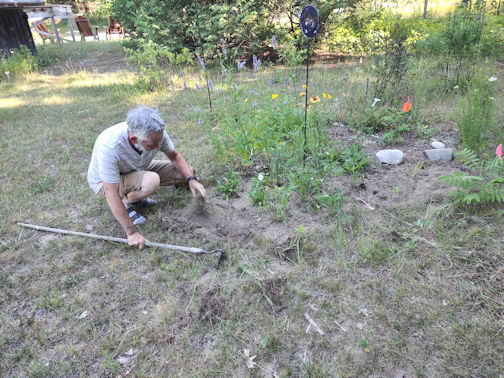 Jim Roberts removes the thin turf grass to make a flower bed
Before I continue, let’s look at the historical and cultural origins of the modern suburban lawn.
The concept of the manicured lawn began in the 16th and 17th Centuries in France and England, among the wealthy elite. The intention was to show that the owner could afford to maintain unproductive, decorative grass instead using it for food production. Originally, they were maintained by manual labour and grazing sheep.
The invention of the push lawnmower in the 1800s, made maintenance easier and lawns became part of public parks and eventually, private homes. Landscape designers began to include open, grassy areas in suburban designs, and short turf grass is a testament to the popularity of golf.
In the post-Second World War housing boom, the lawn became a status symbol and a way to show belonging. Chemical companies began to market fertilizers, herbicides and pesticides to create perfect green spaces. Over time, bylaws and regulations were enacted to impose maintenance standards.
However, this expanse of green comes with a cost to both people and the environment. The perfect lawn requires time and effort, equipment, water, fertilizer and pesticides, and contributes to pollinator decline through pollution and habitat loss. Modern lawns have been described as “ecological deserts.”
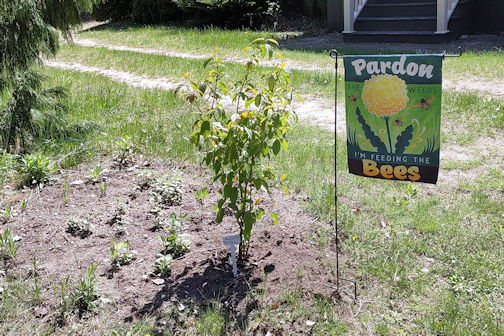 Christine and Jim Roberts began unlawning by planting native shrubs and wildflowers in small unused spaces
Rebecca McMackin is an American ecologically-obsessed horticulturalist and garden designer. Instead of doing away with lawns altogether, her advice is to shrink them by thinking of grass as an area rug rather than wall-to-wall carpet. Keep enough space for play and entertaining but use the rest for something purposeful, such as habitat. I highly recommend her TED talk, presented October, 2023.
Douglas Tallamy, renowned entomologist, author and environmental activist, estimates there are 40-million acres of lawn in the United States. Canadian figures are more difficult to calculate but a David Suzuki Foundation study of seven Canadian municipalities, found that total land area ranged from 8.2-22.7 per cent of turf grass. Obviously, the percentage in urban areas is higher than in rural. There are an estimated 6.2-million lawns in Canada.
Imagine the impact on bio-diversity, carbon sequestration, water filtration and erosion control, if large properties were planted with native flowers, shrubs and trees - particularly in urban centres where the heat-island effect causes significantly higher temperatures which can lead to serious health consequences and higher demand and costs for energy to power air conditioners.
In our yard, we started by filling in unused corners with native trees and shrubs. We also adopted the “area rug” concept and expanded flower beds while retaining sufficient space for our grandchildren to play. Various pathways add interest and allow for easy movement around the property.
An excellent starter guide to shrink your lawn can be found at:
homegrownnationalpark.org/shrink-your-lawn/.
Since we already espoused a “laissez-faire” attitude toward lawn maintenance, the cost saving to us was minimal. However, the benefit of increased pollinator services for our vegetable garden and fruit trees, the improved temperature regulation in summer with increased shade from tree cover and shelter from winds in winter, and the overall benefits to our mental health and enjoyment of our outdoor space, are priceless.
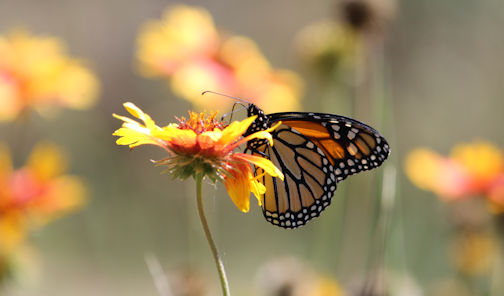
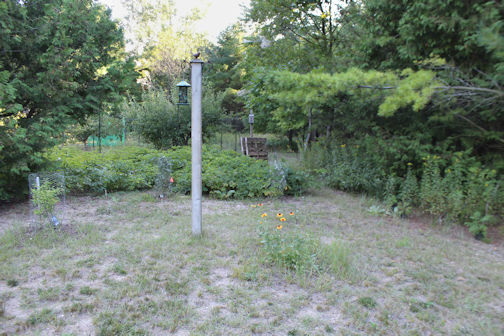 Some wildflowers (blanket flower in this photo) pop up in the Roberts yard uninvited; they decided to allow and expand the planting
 Written By
Christine Roberts is a retired elementary school teacher, president of Huron Bruce Nature, member of the Ripley and District Horticultural Society, volunteer for the David Suzuki Foundation, VON volunteer fitness leader and a passionate lover of nature.



Related Stories
No related stories.