




 July 17, 2026
569
July 17, 2026
569
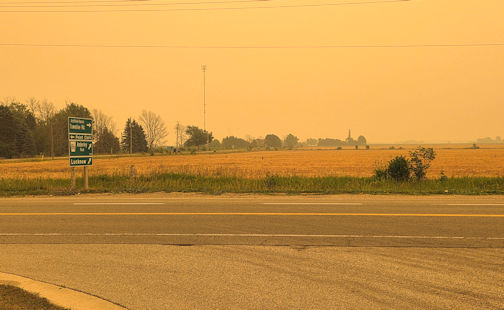
Grey Bruce Public Health is advising residents to continue to monitor local air-quality forecasts and weather alerts and take recommended steps to safeguard their health as the area continues to experience poor air quality due to wildfire smoke.
The province’s Air Quality Health Index (AQHI) for Grey-Bruce, measured at the Tiverton station, is expected to be at the “very high risk” level into Friday night (July 17) and then remain at “high risk” throughout Saturday (July 18).
When the AQHI is at the high-risk level, public health recommends the following:
For the At-Risk population, which includes people with heart or breathing problems: Reduce or re-schedule strenuous activities outdoors. Children and the elderly should also take it easy.
For the general population: Consider reducing or re-scheduling strenuous activities outdoors if you experience symptoms, such as coughing and throat irritation.
Wildfire smoke can adversely affect everyone’s health, even at low concentrations.
In addition to the recommended precautions, Grey-Bruce residents can limit their exposure to wildfire smoke by taking the following measures:
Keep windows and doors closed if the indoor temperature is comfortable
Utilize re-circulation settings on HVAC (heating and air-conditioning) systems
Install clean, high-quality air filters in ventilation systems
Consider using air purifiers with HEPA filters
Seek refuge in community centres, libraries, and shopping malls, where cleaner filtered air is often available.
Public health has developed a dedicated Poor Air Quality web page, with answers to frequently asked questions about the health effects of wildfire smoke. The web page also includes a list of designated relief centres in Grey-Bruce.
An orange-level air-quality warning remains in place for Grey-Bruce by Environment and Climate Change Canada.
People more likely to be impacted by wildfire smoke include those aged 65 and older, pregnant people, infants and young children, and people with an existing illness or chronic health condition.
The poor air quality can cause people to experience mild symptoms, such as eye, nose and throat irritation, headaches or a mild cough. More serious, but less common symptoms, include wheezing, chest pains or severe cough. Anyone experiencing a medical emergency should seek immediate medical assistance.
Residents can monitor the local air quality by visiting the following link: Tiverton - AQHI. Data is posted every hour, 24 hours a day, seven days a week. The AQHI measures air quality on a scale of one to 10-plus. The higher the number, the greater the health risk.
Related Stories
No related stories.