




 June 24, 2016
1556
June 24, 2016
1556
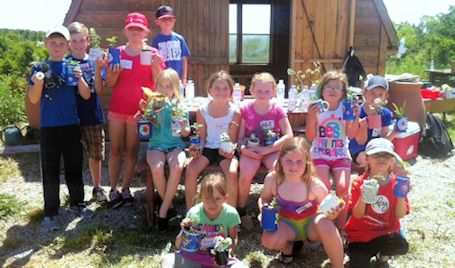
Ripley’s junior horticultural club, "For Our Youth," met at the Pine River Watershed Initiative Network (PRWIN)’s McLarty Study Area, Saturday, June 18.
Isabelle Carter, who lives nearby, told the children that this location, between Bruce County Road 6 (Pine River Road) and Concession 6, was known as the Bombing Range during the Second World War. From Port Albert Airport, pilots-in-training flew to this location in Ripley to practise their bombing skills on a target that was used for this purpose.
Landowners were asked to make their properties available for target practice. Isabelle’s husband, Keith, tells of flares that were used at night to mark the location. Locals who found these flares could collect some money if they returned them to Port Albert.
Now, some 75 years later, bombs were dropped again. This time, however, they were “bombs” containing wildflower seeds dropped by Ripley’s horticultural youth as they learned about wildflowers and studied the bees that visit them.
A scavenger hunt for wildflowers, such as ox-eye daisy, buttercup, vetch, campion, yarrow and bird’s-foot trefoil, sent everyone running to find the flowers on the list. The wildflowers were arranged in a mug to take home.
Linda Jaynes also had the children make plant pots from recycled cans, for the plants they had propagated during the May meeting with Heather Newman.
After marking the bomb locations, the club left the area, in the hope that the seed bombs will bring an abundance of wildflowers to this "Bombing Range" location.
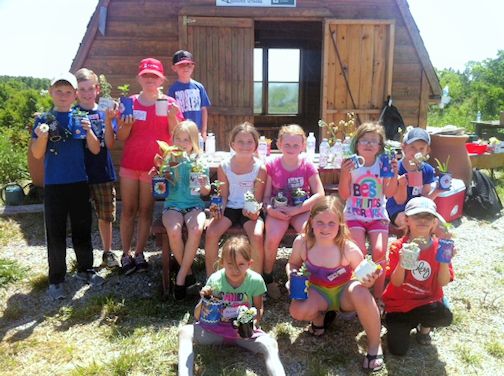
Members of the Ripley junior horticultural club, "For Our Youth," hold up the plant pots they made from recycled cans, for the plants they had propagated during the May meeting with Heather Newman; photo by Heather Newman
Related Stories
No related stories.