Kincardine woman finds development tour of Haiti a rewarding trip
Wendy Cox of Kincardine says travelling to Haiti, to observe work being done to help people through projects of Presbyterian World Service and Development, was a rewarding trip.
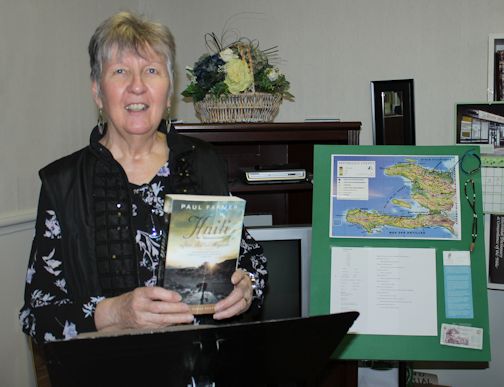
Speaking to about 30 people at the Knox Missionary Society meeting, Tuesday afternoon at Knox Presbyterian Church, Kincardine, she said it was exciting to see the success of the projects first-hand.
Cox joined a group on a “Haiti Exposure Tour” in January, spending just over a week, checking out the various programs designed to assist the locals in this developing nation.
“I've been on similar trips years ago, through Canadian Baptist Ministries, travelling to observe projects in Indian, Bolivia and Brazil,” said Cox. “I decided it was time to travel again; plus, I heard a country-and-western tune that included the phrase, 'Gotta get moving because time is getting short'.”
She said the very first day was tough. The group arose at 4 a.m., to get on the road by 5 a.m., get ahead of Port Au Prince traffic, and reach their 9 a.m. meeting on time. However, a traffic jam, or driver protest blocked the roadway and they had to travel hours in another direction to reach their first stop, finally, six hours late.
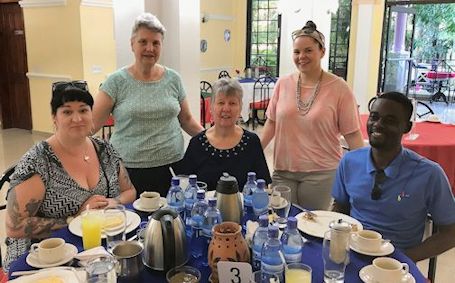
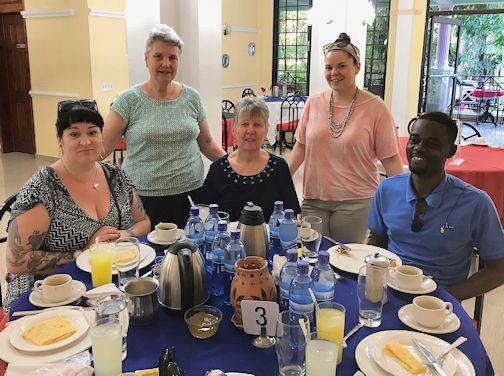
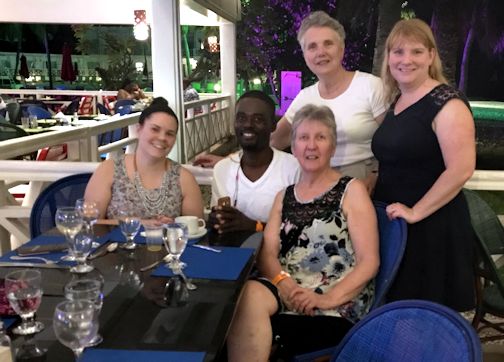
Joining the group, were Meagan, the guide, translator, facilitator and educator; and Moise, the driver.
“We certainly saw a lot of Haiti on that first day,” said Cox, “and finally reached the Partners in Local Development project at 3 p.m., hot, tired and dusty.”
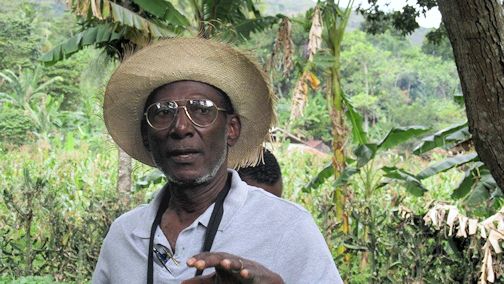
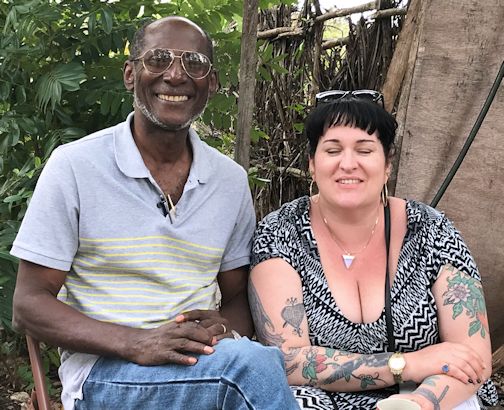
There, they met executive director Cantave Jean-Baptiste, an economist and agronomist, who has been working with rural communities in Haiti since 1980.
“An estimated 80 per cent of the population in Haiti lives in poverty and Cantave works to organize rural people to address the needs facing their own communities,” said Cox.
The observers were told that 18 farmers (including women) had been trained in methods of soil retention and remediation, and crop diversification, and much appreciated the opportunity to improve their lives. They built small dykes or levees across their growing plots in order to retain as much of the rainfall as possible. They used crop stubble as mulch, instead of burning it.
Cantave talked of a new ground cover plant that is seeing success. The farmers had received good seed and had experienced good harvest. They planted manioc (Cassava), sugar cane, plantains and bananas, corn (maize), yams and sweet potatoes, and rice. By diversifying their crops they stood a much better chance of harvesting food at any time of year.
“We made a brief visit to one of the gardens that were part of the project,” said Cox, “and witnessed, first-hand, the way good training and ideas spread through a community.”
She noted that the group was invited to a meal and she filled her plate because she was hungry, not realizing that among the food was a volcanic-heat pepper that when she bit into it nearly seared her tonsils.
“Meagan chose that moment to tell us that in order to compliment a Haitian cook, guests would clear their plates and go back for seconds and I gazed horror-struck at the three peppers still on my plate,” said Cox. “There was no way around it, I would have to suck them up, or insult the lovely lady who had prepared this generous meal. The solution was to swallow them whole, that way I only tasted the sauce, not the heat!”
The next day, they toured more of Cantave's projects, but had to cross a river and trek along it to get to the farmer's plot. They learned that not all the farmland is owned by farmers, which discourages the tenant farmers from making vast improvements to the land.
“I should mention that our vehicle was fitted with a snorkel for fording rivers,” said Cox. “Moise would throw a switch and instead of the vehicle exhausting low at the back, it went up a pipe and exited by the roof!”
During their tour, they saw a lake entirely polluted by the cyanide washed down from a gold mine. It has killed both people and animals. The mines involved are both American and Canadian.
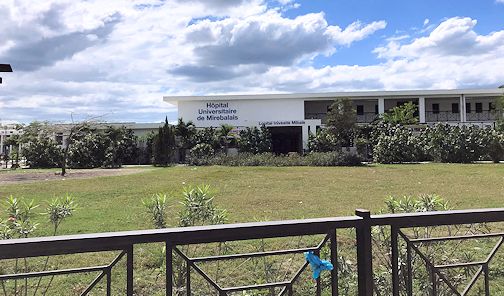
The next day, they travelled to the Partners in Health's Mirebalais University Hospital to hear about two projects there.
Firstly, the food supplement program. This prepares a nutritional liquid from peanuts, and provides it to children who would otherwise be undernourished. Secondly, a project dealing with gender-based violence and the measures being taken to help women victims.
“The bottom line in observing these projects, is to see what's going on,” said Cox. “Plus, it's encouraging to the people running the projects, and those taking part."
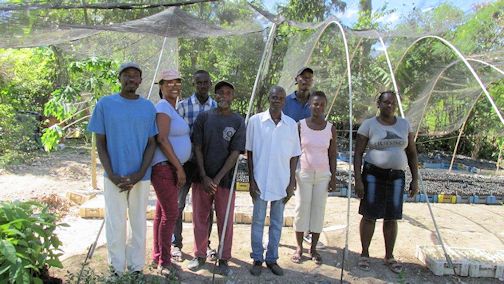
Another stop was at the Mennonite Central Committee's Agroforestry Project.
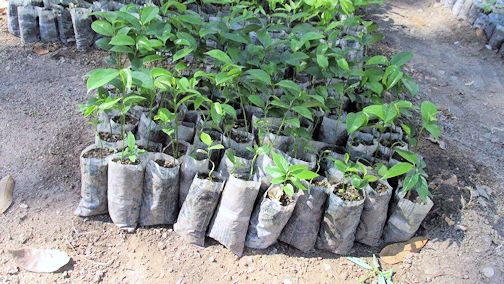
“There are two prongs to the agroforestry project, one of which deals with food security and the other with income generation,” said Cox. “The basis of both is the tree nursery which provides seedlings to the locals at a nominal price.”
People sign up in order to purchase the seedlings, and are given a little training on how to plant them and how to maintain them. Some are fruit trees which provide food for their cultivators, others are forest trees grown for four years or so then harvested to make charcoal or for building.
“There was some discussion about the production of charcoal, since it's hard work and wastes a lot of energy,” said Cox. “However, it's cheap to purchase and burns clean. One of the workers said that he'd bought his wife a gas-powered stove, but she was nervous of it. Also, given that so many people live in areas hard to access, if they changed to gas stoves, how would refills be delivered to them? A third problem was the fact that the developed world sometimes 'sends on' things like past-dated gas cylinders to the developing world, with the potential for harm to the purchaser.
“We were taken to one of the 23 tree nurseries which produce the seedlings. Originally the seeds were started in commercially-produced plastic containers. But, happily, someone had the bright idea of recycling plastic water bags which hitherto, had been tossed after use.”
Cox said one of the highlights of the trip was meeting such outstanding and gifted people, including Meagan and Moise.
She added that she would be happy to return to Haiti, provided she had an escort like Meagan, and a driver like Moise; and provided she could be of some benefit to the people of Haiti.
“I never want to be what my daughter terms a 'disaster tourist' - someone who goes to see people in dire straits as a way of feeling good about their own situation,” said Cox. “Are there reasons that you should consider a mission trip? Let me share a Haitian proverb for you to ponder: 'The rock in the water doesn’t understand the misery of the rock in the sun'."
Cox will be giving a more in-depth presentation at Knox Presbyterian Church, Kincardine, on Mission Awareness Sunday, April 29.
 Written By
Liz Dadson is the founder and editor of the Kincardine Record and has been in the news business since 1986.



Related Stories
No related stories.