Disposing of Giant Hogweed takes common sense, says county weed inspector
Concerns have been raised that the invasive Giant Hogweed is spreading and taking over portions of the lakeshore along the Bayfield River Flats, as well as Saugeen Shores and up through the Bruce Peninsula.
People are urged to report when they spot this plant, and anyone can dispose of it, provided you use common sense.
That's the word from Kevin Predon, noxious weed inspector for Bruce County.
“If property owners suspect that they have Giant Hogweed on their property, they can report it to me, my contact information is available on the county’s website,” he said. “Please note that Giant Hogweed is listed as a noxious weed under the Ontario Weeds Act, and as per the legislation, removal and disposal of noxious weeds is the responsibility of the property owner.”
He stressed that this is NOT the time of year to be killing Giant Hogweed.
“Herbicides are ineffective when the plants are in late stages of blooming because they will continue their lifecycle and produce their seed anyways, and the plants are too big and pose more of a risk for cultural control methods. However, if people require professional assistance, I would suggest that they look in the Yellow Pages for people employed in the vegetation control industry.”
By the same token, Predon said Giant Hogweed is not the scary, dangerous plant that people imagine it is, and most people can dispose of it if they use common sense.
“The best way, and the best time of year, and the best tool to use for killing Giant Hogweed is in the spring/early summer when the plants are small, and unintimidating, and to take a simple garden shovel and drive it through the plant’s tap root,” he said. “Then you just let the plant fall to the ground, and you can leave it there to rot, and you don’t ever have to touch it. Sure, it may grow back, but then you just have to hit it again, and keep doing it until it doesn’t come back.
“I have done this hundreds, if not thousands, of times, and have not had a single drop of hogweed juice on me. When doing this, I wear long sleeves, long pants, and eye protection, but since I don’t come into contact with the plants, and I’m not spraying hogweed juice all over myself, I’ve successfully mitigated the risks associated with this plant.
“Yes, I also use herbicides, because I am licensed to do so, but the beauty of a shovel is that it can be used anywhere, anytime, by anybody. Honestly, if more people would just take a shovel to these plants when they see them in the spring time, it would really help to reduce infestations and slow the spread of this plant.”
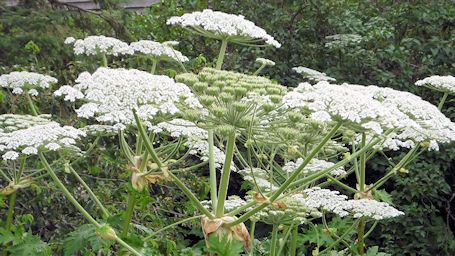
Giant Hogweed is native to Eurasia and was introduced to North America in the early 1900s. It crowds out native plants, and grows in fresh to wet soils along roadsides, in forests, swamps, meadows, and marshes.
It is distinguishable by its large size, more than six feet and often up to 12 feet tall, and is a member of the carrot family.
 Written By
Liz Dadson is the founder and editor of the Kincardine Record and has been in the news business since 1986.




Related Stories
No related stories.