


 May 16, 2019
1652
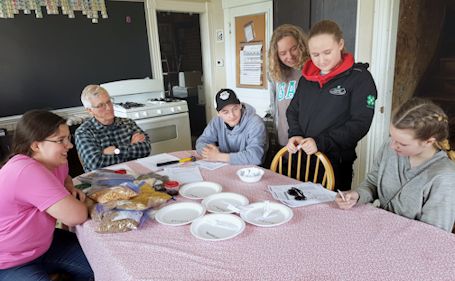
The Ripley 4-H Dairy Club welcomed two new members at the second meeting, held May 11 at the Weber farm.
Roll Call included a challenge: "Name one type of food you used to eat which you don’t eat any longer or that you eat now which you never used to eat." It was discovered that members had added foods to their diet, such as Avocados, Potato salad, Brussels sprouts, and Shepherd's pie.
After secretary Tessa King finished reading the minutes of the last meeting, vice-president Molly King turned the meeting over to leader Alec Martin. He is a veterinarian and described the development of the digestive system in cattle, starting with the Esophageal Groove.
| Chambers of the stomach | % Of total stomach |
|
| Newborn Calf | Adult Cow | |
| Rumen | 25% | 80% |
| Reticulum | 25% | 6% |
| Omasum | 10% | 3% |
| Abomasum | 40% | 11% |
When a calf is born, its digestive system is not fully developed and only the Abomasum is functioning. A special tunnel, called the Esophageal Groove is opened when the calf smells and tastes milk, and suckles. This grove delivers the milk straight to the Abomasum.
Just as humans grow and their diet changes, the same is true with calves. The first thing a calf drinks is colostrum, followed by milk. The first feed offered to the calf is Calf Starter which supplements the milk, and then along with hay, is the primary food once the calf has been weaned.
After the calf is three to four months old, it switches to a Grower Diet. It is dry feed, such as Calf Starter, that grows the Rumen in size and develops the bacteria in it until the Rumen becomes the largest stomach chamber.
Alec also explained to the club the importance of good quality colostrum (the first milk that the cow produces after calving).
Unlike humans, when a calf is born, it has no immunity. If the calf does not get colostrum, it will die (usually within a week). A copy of the cow's immune system is transferred to the calf through the antibodies in the colostrum, giving the calf immunity to diseases that the mother has dealt with until its own immune system is developed.
The club members finished the meeting by trying their hand at being nutritionists. They looked at 26 feed ingredient samples, such as Whole Corn, Haylage, Barley, and Soybeans, and used the nutritional break-downs in order to evaluate which was the best sources of Protein, Energy, Minerals, Vitamins and Water.
The point of this activity was to better understand the feed ingredients used by farmers to create a diet that sustains their herd of cows and keeps them healthy. The Dairy Club appreciates the farmers who donated the samples and analysis.
The next meeting will be in June. New members are welcome.
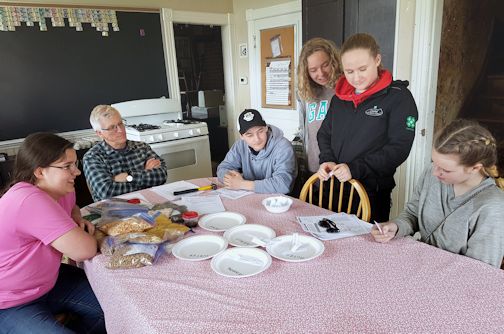
Ripley 4-H Dairy Club leader Alec Martin (in plaid shirt) helps club members try their hand at being nutritionists at the end of the second meeting; photo by Sharon Martin
Related Stories
No related stories.