


 June 1, 2015
1669
June 1, 2015
1669
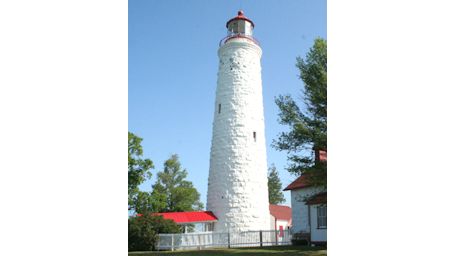
The national historic site, located on the shores of Lake Huron in Huron-Kinloss Township, has been closed to the public since 2010 due to restoration work to the masonry. Owned by Parks Canada, it is operated by the township as a tourist destination.
Initially, the federal government put about half-a-million dollars toward the restoration. However, it was discovered that more extensive repairs were required and the cost soared to more than $1.5-million.
Originally, the repair work was to begin in the fall of 2010 and be completed by March 31, 2011, as dictated by the federal government's Economic Action Plan. However, in October, 2011, the restoration work was stopped because it was discovered the structure had suffered more damage than initially anticipated.
The initial design for restoration work was based on the existence of one large vertical crack extending through multiple courses of masonry. Once the exterior surface treatment was removed by sandblasting, workers discovered there were four such cracks.
One aspect of the repairs involved raking the joints between the stones to prepare for re-pointing with new mortar. Soon after this work was commenced in the mid-section of the tower, it was found that once the first layer of mortar (a relatively modern repair - one to two inches in depth) was removed, the original lime mortar behind it was found to be in completely poor condition with no supporting strength.
This meant the raking procedure was putting workers and the tower at risk, so a Stop Work Order was issued until a re-designed procedure was drawn up and approved.
At that point, it was reported that the damage to the top eight courses of masonry was more extensive than anticipated, and there was evidence of moisture penetration into the rubble core over a period of time. The contractor's engineer recommended that the lantern section be temporarily removed from the top of the tower to facilitate the complete rebuilding of the top eight courses of masonry. This would ensure the safety of the workers, reduce the overall risk to the historic tower, and allow for more thorough and effective repairs.
The Point Clark Lighthouse was built in 1859 to warn sailors of the shoal extending 3.2 kilometres offshore. Its elegant proportions and limestone exterior are typical of the six "Imperial" towers built in the region, a lighthouse style rarely seen elsewhere in Canada.
Acquired by Parks Canada in 1967 to commemorate the vital role of lighthouses in navigation on the Great Lakes, it still serves its primary function - an aid to navigation. The lightkeeper's dwelling, built at the same time as the lighthouse, will continue to be operated as a museum by the township.
A breathtaking vista is the reward for climbing the 114 stairs up the winding staircases at the lighthouse.
Written ByLiz Dadson is the founder and editor of the Kincardine Record and has been in the news business since 1986.
Related Stories
No related stories.